The implementation of the National Education Policy (NEP) 2020 and the Central Board of Secondary Education (CBSE) three-language formula has significantly transformed the academic framework for middle and secondary school students. Under this progressive educational model, learning a third language is no longer just an academic formality but a vital step toward multilingual proficiency and cultural integration. For students in Andhra Pradesh—or those across the country choosing the Andhra Pradesh regional curriculum—aiming to balance scoring potential with linguistic enrichment, opting for Telugu as a third language in Class 9 is a highly strategic choice.
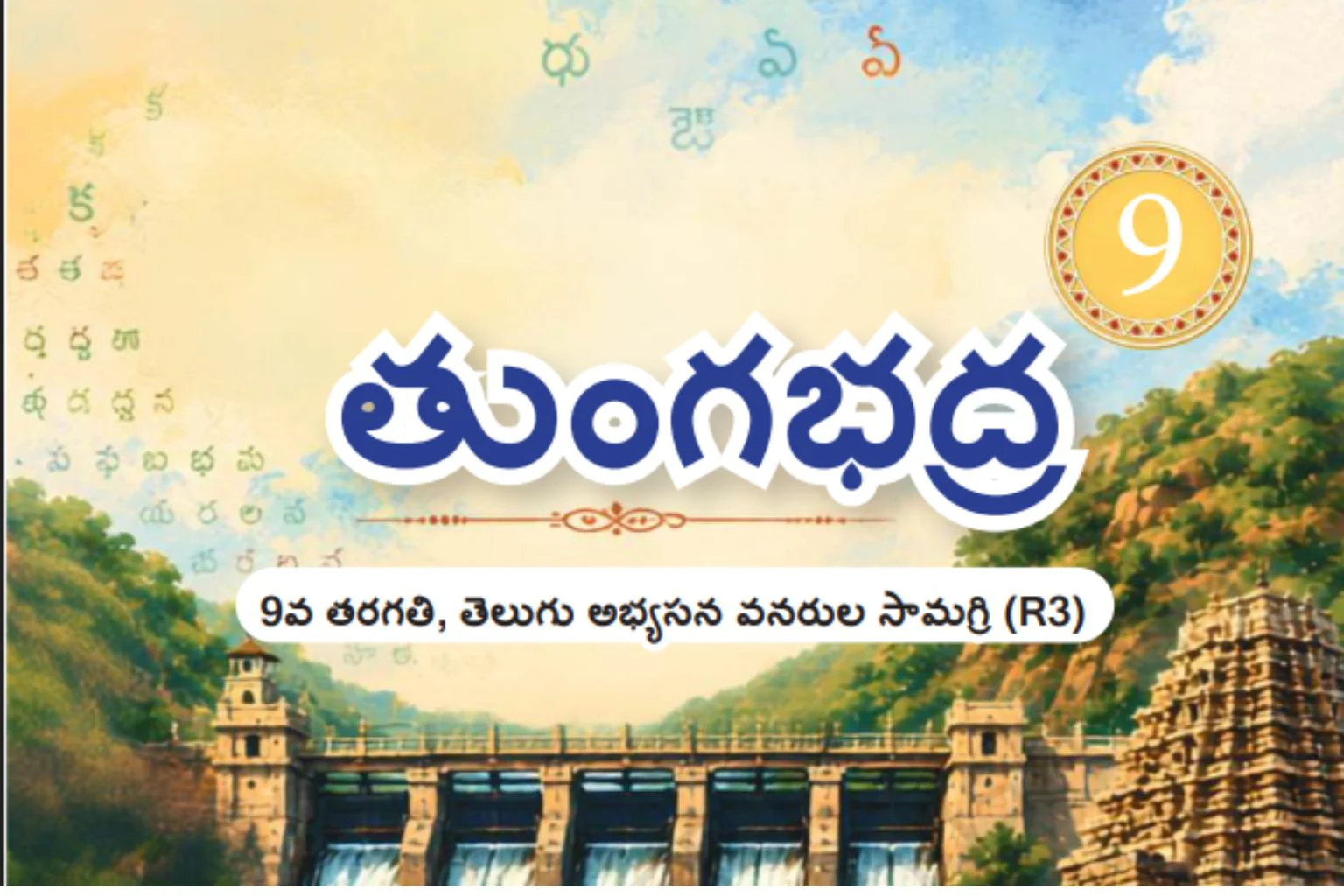
The CBSE Class 9 Telugu 3rd Language curriculum for Andhra Pradesh revolves entirely around the expertly crafted textbook Tungabhadra. This textbook is designed to build foundational grammar, expand vocabulary, and foster a deep appreciation for classical and contemporary Telugu literature.
CBSE Class 9 Telugu 3rd Language Tungabhadra Book (R3)
| Parameter | Details |
| Academic Board | Central Board of Secondary Education (CBSE) |
| Academic Class | Class 9 |
| Subject Category | Third Language (Under the R1, R2, R3 Framework) |
| Prescribed Textbook | Tungabhadra (తుంగభద్ర) |
| Publisher | National Council of Educational Research and Training (NCERT) |
| Curriculum Framework | NEP 2020 and NCF-SE 2023 |
| Syllabus Focus | Conversation, Reading Comprehension, Writing Ability, and Literary Appreciation |
Selection Criteria for Choosing Telugu (R3)
The selection criteria for languages in the Class 9 curriculum are strictly governed by the newly enforced three-language formula. To successfully elect Telugu as your third language using the Tungabhadra syllabus, students must understand the fundamental NCF-SE 2023 guidelines:
The Indian Language Mandate: Under the educational framework, out of the three languages chosen by a student (R1, R2, and R3), at least two must be native Indian languages. Selecting Telugu perfectly satisfies the criteria for an indigenous language with a highly rewarding curriculum.
Holistic Linguistic Development: The Tungabhadra curriculum moves strictly away from rote memorization, focusing instead on building active listening, speaking, reading, and writing skills. It is highly suitable for students who wish to engage in meaningful activities like role-playing, poetry recitation, and creative writing.
Cultural Integration: The textbook is designed to introduce learners to India’s great linguistic and literary traditions, fostering a deep connection with the region’s socio-cultural background and heritage.
Exam Pattern and Assessment Strategy
| Section | Assessment Area | Evaluation Methods & Question Types |
| Section A | Reading Comprehension | Unseen prose passages and reading evaluations integrated with classroom teaching. |
| Section B | Writing Skills | Short messages, letter writing, descriptive paragraphs, and narrative writing exercises. |
| Section C | Applied Grammar | Contextual vocabulary, punctuation, synonyms, antonyms, and correct usage of idioms/proverbs. |
| Section D | Literature (Textbook) | Questions derived directly from the Tungabhadra chapters, assessing poetry, historical biographies, and prose. |
| Internal | School-Based Assessment | Oral responses, storytelling, role-plays, group activities, presentations, and student portfolios. |
Topic-wise Syllabus
| Chapter Number | Chapter Name (Telugu) | Key Topics Covered in the Tungabhadra Textbook |
| Chapter 1 | అక్షరయానం (Aksharayanam) | Foundational alphabet recognition, vowels (Achulu), consonants (Hallulu), word formation, reading simple words with pictures, and basic writing mechanics including consonant conjuncts (Othulu). |
| Chapter 2 | సుభాషితాలు (Subhashitalu) | Classical moral poetry focusing on the Sumathi Shatakam by Baddena and the Vemana Shatakam by Yogi Vemana, complete with meanings and moral values. |
| Chapter 3 | జాతీయాల జిలుగుతో తెలుగు భాష (Jatiyala Jiluguto…) | Comprehensive study of Telugu idioms (Jateeyalu), their origins, their usage in enhancing language beauty, and the fundamental differences between idioms and proverbs (Sametalu). |
| Chapter 4 | ఓ కూనలమ్మ! (O Kunalamma!) | Modern poetry by the progressive poet and researcher Arudra, focusing on societal themes and simple poetic structures ending with the phrase “O Kunalamma!”. |
| Chapter 5 | ఆరోగ్యమే అసలైన సంపద (Arogyame Asalaina Sampada) | An informative essay explaining why “Health is Wealth”, focusing on the importance of nutritious food, daily exercise, traditional games, and mental peace through yoga. |
| Chapter 6 | అమ్మ జ్ఞాపకాలు (Amma Gnapakalu) | A free-verse poem by T. Krishnamurthy Yadav, beautifully illustrating a mother’s hard work, sacrifices, and unconditional love using rural Telangana dialect and imagery. |
| Chapter 7 | శ్రీమతి దుర్గాబాయ్ దేశముఖ్ (Srimati Durgabai Deshmukh) | An inspiring biographical chapter detailing the life of the “Iron Lady” Dr. Durgabai Deshmukh, her role in the freedom struggle, and her efforts in women’s education. |
| Chapter 8 | నీవేమైనా చేయగలవు (Nivemaina Cheyagalavu) | An encouraging poem by Padma Shri awardee Boyi Bhimanna emphasizing self-confidence, human potential, and the power of a good heart to achieve greatness. |
| Chapter 9 | రాయడం నేర్చుకుందాం (Rayadam Nerchukundam) | A practical guide to developing writing skills, emphasizing good handwriting (Dasturi), avoiding grammatical errors, paragraph structuring, and proper use of punctuation marks. |