

The Andhra Pradesh Public Service Commission (APPSC) Assistant Statistical Officer (ASO) recruitment requires a solid grasp of both general studies and core statistical and economic concepts. For the 2026 recruitment cycle, the syllabus and exam pattern remain focused on evaluating candidates through a two-stage objective-type examination process.
APPSC ASO Syllabus 2026
| Organization Name | Andhra Pradesh Public Commission |
| Job Name | Assistant Statistical Officer (ASO) |
| Job Location | Andhra Pradesh |
| Job category | Syllabus |
| Official Site | psc.ap.gov.in |
Assistant Statistical Officer Selection Process 2026
As the competition is high, the Commission is conducting a Screening test initially known as the Preliminary Exam (Part-1), which contains General Studies & Mental Ability and subject-knowledge topics. Here is the Selection Process.
- Preliminary Examination
- Mains Examination
- Document Verification
APPSC Assistant Statistical Officer Exam Pattern 2026
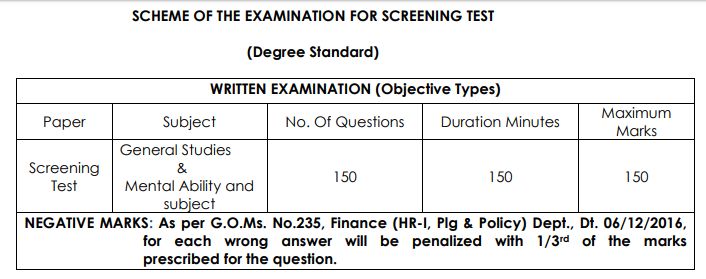
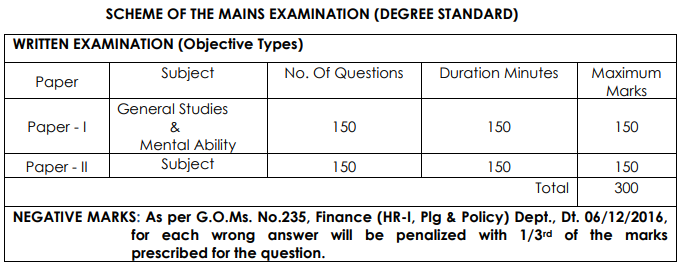
Both the Screening Test and the Main Examination feature objective-type questions and enforce a strict negative marking penalty of 1/3rd for incorrect answers.
APPSC ASO Prelims Exam Pattern 2026
APPSC ASO Mains Exam Pattern 2026
APPSC ASO Syllabus 2026 Subject Wise
APPSC ASO Screening Test Syllabus 2026
APPSC ASO General Studies & Mental Ability Syllabus 2026 (Paper I)
This section tests a candidate’s awareness of current events, regional history, and administrative reasoning.
- Events of national and international
- Current affairs- international, national and
- General Science and it applications to the day to day life Contemporary developments in Science & Technology and information
- Social- economic and political history of modern India with emphasis on Andhra Pradesh.
- Indian polity and governance: constitutional issues, public policy, reforms and e-governance initiatives with specific reference to Andhra
- Economic development in India since independence with emphasis on Andhra
- Physical geography of Indian sub-continent and Andhra
- Disaster management: vulnerability profile, prevention and mitigation strategies, Application of Remote Sensing and GIS in the assessment of
- Sustainable Development and Environmental Protection
- Logical reasoning, analytical ability and data
- Data Analysis:
- Tabulation of data
- Visual representation of data
- Basic data analysis (Summary Statistics such as mean, median, mode, variance and coefficient of variation) and Interpretation
- Bifurcation of Andhra Pradesh and its Administrative, Economic, Social, Cultural, Political, and Legal implications/problems.
APPSC ASO Syllabus for Paper II
- Economic Concepts: Concepts of Production, Consumption and Demand – Concept of Elasticity- Market Structures and Equilibrium – Price determination.National Income: concepts and determinants – employment, consumption, savings and investment. Rate of Interest and Profit. Concepts of Money and measures of money supply, velocity. Banks and credit creation, Banks and portfolio management, Central Bank and control over supply of money. Determination of price level – Inflation: meaning, measurement and control. Public Finance: Budgets, Taxes and non-tax revenues, Budget deficits.
- International Economics: Free Trade and Protection – Balance of payments accounts and adjustment – Exchange rate under the exchange markets – International Monetary System and World Trading order – Brettonwoods system. IMF and the World Bank and their Sources of growth – capital, Human capital, productivity, Trade and aid, non-economic factors.
- Indian Economics: Main features: Population; size, composition, quality and growth trend, occupational distribution, Effects of Births and Deaths. Mass poverty – Unemployment and its types – Inequality and types thereof – Rural-urban disparities. Foreign Trade: Balance of Payments and External Debt. Inflation and parallel economy and its effects. Fiscal deficit. Sectoral trends and regional disparities. Economic Planning in India: Major controversies on planning in India, NITI Ayog. Broad Fiscal, monetary, industry, trade and agricultural
- Financial Accounting: Introduction to accounting – Accounting concepts and conventions – Accounting process – Journalizing, Posting to ledger accounts – Subsidiary books including Cashbook – Bank Reconciliation Statement – Preparation of Trial Balance and Final Accounts – Errors and Rectification – Depreciation and Reserves – Single entry and non-trading
- Basics of Computers: Binary system, Octal, and Hexadecimal systems. Conversion to and from Decimal systems. Codes, Bits, Bytes, and Words. The memory of a computer, Arithmetic and Logical operations on numbers. Algorithms and Flowcharts. Using Spread Sheet: Basics of Spreadsheet; Manipulation of cells; Formulas and Functions; Editing of Spread Sheet, printing of Spread
- Introduction to Statistics: Collection of data: primary and Secondary data. methods of Sampling (Random, Non-Random), Definition of Probability – Census- Schedule and questionnaire – Frequency distribution – Tabulation – Diagrammatic and graphic presentation of
- Measures of Central Tendency: Meaning objectives and characteristics of measures of central tendency –Types of Averages: Arithmetic Mean, Geometric Mean, Harmonic Mean, Median, Mode, Quartiles Deciles, Percentiles-Properties of averages and their
- Measures of Dispersion and Skewness: Dispersion: Meaning and properties –Types: Range, Quartile Deviation, Mean Deviation, Standard Deviation, Coefficient of Variation. Skewness: Meaning – Karl Pearson and Bowl’s measures of skewness, the concept of kurtosis – normal distribution.
- The measure of Relation: Correlation meaning and uses – types of correlation – Karl Pearson’s correlation coefficient – Spearman’s rank correlation – probable
- Analysis of time series and Index Numbers: Time Series analysis: Meaning and Uses – Components of time series – Measurement of trend and seasonal variations – Utility of decomposition of time series – Decentralization of Index Numbers: Meaning and importance – Methods of construction of Index Numbers: Price Index Numbers, Quantity index Numbers – Tests of Adequacy of Index Numbers -base shifting and deflation of Index Numbers – Cost of living Index Numbers – Limitations of Index Numbers. Concepts of price, quantity and cost Index Numbers. Deflation of Index Numbers.
Note: The Syllabus is Same for both Screening Test and Mains Exam
Direct Link to Download APPSC Assistant Statistical Officer Syllabus 2026